
Your Vote is Your Voice for Your Values!
Voting is one of the most important roles we have as American citizens. Our voice is our vote for our values. If we aren’t voting, our voice isn’t heard and our values are not represented.

JUMP TO A TOPIC
WELCOME TO MOMVOTE GATEWAY
MomVote Gateway provides the information and resources you need to vote your values with confidence.
MomVote helps you understand the voting process, research the candidates and issues on your ballot, and make informed decisions based on your own principles, values, and priorities.
GOOD TO KNOW
Election laws, registration deadlines, identification requirements, and voting options vary by state, and sometimes by county. Always confirm your information with your state or local election office before voting. A simple Google search will direct you to your county election office.
The links below will help guide you from registering to vote, to casting your ballot on Election Day.
STEP 1
Register to Vote
Visit Vote.gov to find official registration instructions for your state. You can also use the National Association of Secretaries of State’s Can I Vote resource to reach your state’s official election information.
A few simple ways you can register to vote:
Online through your state’s official election website
Through your county or local election office
By mail using a voter-registration form
In person at designated government offices
At a motor vehicle office
During early voting or on Election Day in states that offer same-day registration
Are you registered to vote?

STEP 2
Check or Update Your Voter Registration
Even if you have voted before, check your registration well before every election. A registration record may need to be updated if you:
- Moved to a new address
- Changed your name
- Changed your mailing address
- Want to change or declare a political-party affiliation
- Have not voted in several election cycles
- Recently became eligible to vote again under your state’s laws
Do not assume that updating your driver’s license automatically updates your voter registration. Confirm the change directly with your state or local election office.
STEP 3
Find Your State or County Election Office
Depending on your location, this office may be called the:
- County Elections Office
- County Clerk
- Board of Elections
- Registrar of Voters
- Supervisor of Elections
- Election Commission
Your election office can help you:
- Register or update your registration
- Confirm your voting status
- Find your correct polling place
- Review voting hours
- Request a sample ballot
- Learn about early voting
- Request a mail or absentee ballot
- Understand voter-identification requirements
- Ask about accessible voting services

What is on your ballot?
STEP 4
Know What Is on Your Ballot
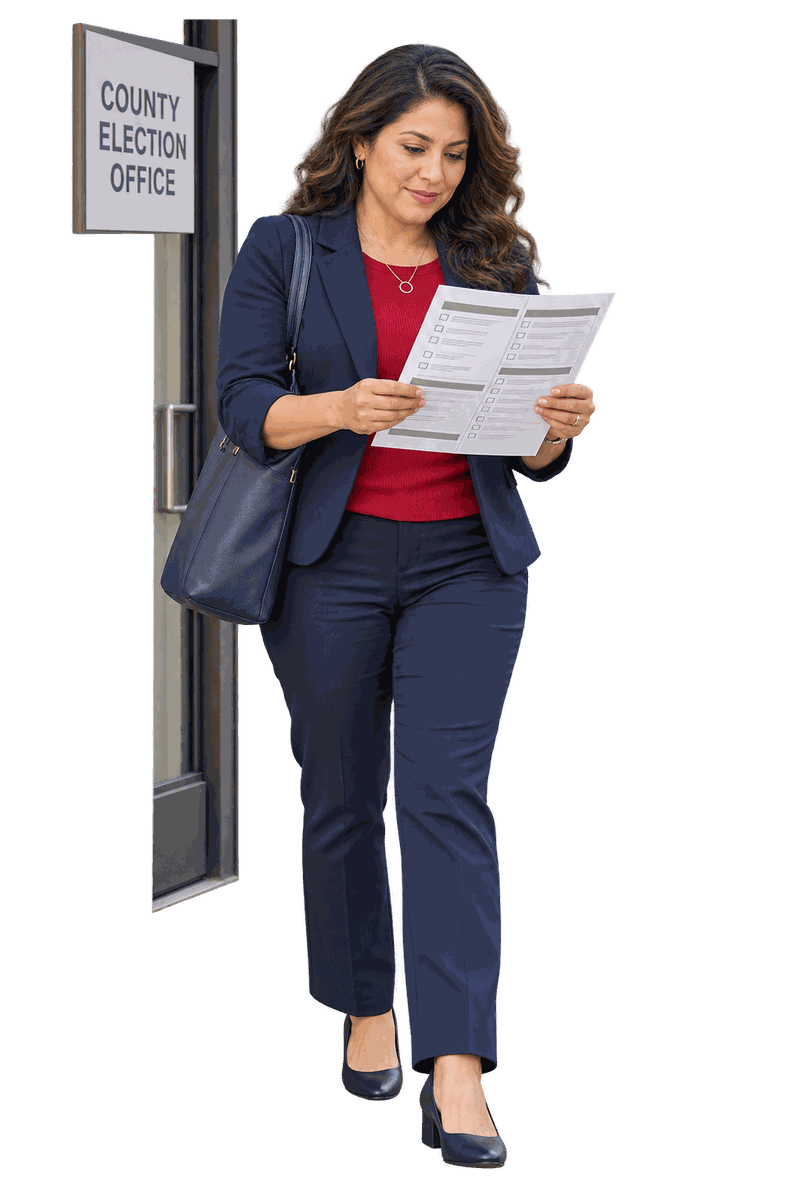
A sample ballot shows the candidates, offices, judges, constitutional amendments, propositions, bonds, tax questions, and other measures that may appear on your actual ballot.
Because ballots can differ by precinct, be sure you are viewing the sample ballot assigned to your home address.
You may obtain a sample ballot through:
- Your county or local election office
- Your state election website
- Your county election website
- A mailed voter-information guide
- A nonpartisan ballot-information service
Reviewing your sample ballot before voting gives you time to research every race and proposal – including the local races that are sometimes overlooked.
STEP 5
Where to Vote: Find Your Polling Place
Use your state or county’s official election website for the most current information. The Can I Vote portal can direct you to your state’s polling-place lookup.
Before leaving to vote, confirm:
- Your correct polling location
- Election Day voting hours
- Whether your assigned location has changed
- Your state’s voter-identification requirements
- Whether your state allows voters to use any polling location or requires an assigned precinct
- Accessibility and curbside-voting options, when needed
STEP 6
When Can I Vote?
Voting generally takes place through one or more of these methods:
Election Day Voting
Vote at the polling place assigned to your address – or at an authorized voting center if your jurisdiction uses vote centers. Confirm the hours and location before Election Day.
Early In-Person Voting
Many states allow voters to cast ballots before Election Day. Early-voting dates, hours, and locations may differ from Election Day arrangements.
Absentee or Mail Voting
Eligibility, application deadlines, witness requirements, identification rules, and ballot-return procedures vary by state. Some states mail ballots automatically, while others require voters to request one.
If voting by mail:
The Election Assistance Commission’s voter FAQs explain common voting procedures and direct voters to state-specific information.
- Request your ballot early
- Read every instruction carefully
- Sign the required envelope
- Complete any witness or identification requirements
- Return the ballot before your state’s deadline
- Use your state’s official ballot-tracking system, when available
STEP 7 – RESEARCH, REPORT CARD AND ENDORSEMENTS
Research Your Candidates and Issues
Researching candidates and issues can be daunting and we know moms are busy because we are moms. And while we want to know who and what is on our ballot, we don’t want to be told who to vote for. That is why we have made every effort to provide the information so you can decide who and what best represents your principles, values, and priorities.
A great way to determine where a candidate stands on issues that matter to you is to examine their voting records, public statements, experience, priorities, endorsements, and responses to voter questionnaires.
MOMS FOR AMERICA ACTION
Congressional Report Card
Each year, Moms for America Action grades members of Congress based on their legislative votes involving families, parental rights, education, constitutional government, and other issues important to mothers.
CANDIDATE ENDORSEMENTS
2026 Endorsed Candidates
Moms for America Action independently evaluates candidates for federal, state, and local office. See the 2026 endorsed candidates.
DIG DEEPER
Independent & Third-Party Research Resources
In addition to Moms for America and Moms for America Action resources, the following independent, third-party resources may also be helpful. Their selection criteria, questionnaires, analysis, and editorial approaches differ so you may want to view various sites. We partner with iVoterGuide and highly recommend them as a reliable source of candidate information.
iVoterGuide
Our Partner · Highly Recommended
Candidate research and voter-guide information
Ballotpedia Sample Ballot Lookup
Candidate, office, election, and ballot-measure information
Congress.gov
Federal legislation and congressional voting records
Vote Smart
Candidate biographies, positions, ratings, and voting records
Vote411
Personalized ballot and election information
Also check:
Your state legislature’s official website for bills, votes, committee activity, and legislator information — and candidate campaign websites for their own stated positions and priorities.
KNOW THE DIFFERENCE
Compare the Party Platforms
Political party platforms describe the principles and policy priorities officially adopted by each party. A platform is not a guarantee of how every candidate or officeholder will act, but it can help voters understand the party’s stated direction.
The following comparison, created by Family Research Council (FRC), summarizes positions contained in the parties’ officially adopted national platforms.
Provided for educational purposes and does not constitute an endorsement of any party or candidate. Individual candidates may hold positions that differ from their party’s national platform. Voters should review each candidate’s record and stated positions before voting.

Getting to the Polls
It’s easy for busy moms to lose track of time so we encourage marking your calendar and voting early in the day whenever possible. Setting an alarm on your phone is a great way to remember.
A MOMS FOR AMERICA IDEA
Vote Share
But what about getting there? A lot of moms have preschoolers at home which can make voting challenging. That is why Moms for America developed Vote Share!
You have friends and neighbors that need to vote too. So you can watch their children while you vote and they can watch yours while you vote. You can also go to your voting location together to help with each other’s children.
When you can, taking your older children when you vote is a great way to open a conversation about why voting is so important. When they see it in action and not just in word, they will remember it.

QUESTIONS MOMS ASK
Frequently Asked Questions
Do I need to register again for every election?
Usually not, but you should verify your registration before every election. Update it whenever your name, address, or other required information changes.
Can I bring a sample ballot or notes into the voting booth?
Many jurisdictions permit written notes, but rules differ. Check with your local election office. Photography and cellphone use may be restricted inside polling places.
What if my name is not on the voter list?
Ask a poll worker to confirm your information and explain your options. Depending on the circumstances and state law, you may be able to update your information, visit another location, or cast a provisional ballot.
I moved. Can I still vote at my old polling place?
Do not assume that you can. Update your registration and contact your election office. Your options will depend on when you moved and your state’s laws.
What identification should I bring?
Requirements vary by state. Use your state’s official election website to determine which forms of identification are accepted and what options are available if you do not have them.
Can I receive assistance when voting?
Federal and state laws provide assistance, and accessibility protections, in many circumstances. Contact your election office before voting if you need language assistance, an accessible voting machine, curbside voting, or another accommodation.

A simple plan can prevent last-minute problems.
Voting Plan Checklist
Before voting:
- Confirm that you are registered at your current address.
- Locate your official sample ballot.
- Research the candidates and ballot measures.
- Decide whether you will vote early, by mail, or on Election Day.
- Confirm the correct location and voting hours.
- Review your state’s identification requirements.
- Arrange transportation or childcare if necessary.
- Allow enough time to vote without being rushed.
- Carefully review your completed ballot before submitting it.
Be Informed. Be Prepared. Be Heard.
Your vote affects your family, your community, and the future your children will inherit. Take the time to register, research your ballot, make a voting plan, and encourage other eligible citizens to do the same.
Disclosure: Moms for America Action (501c4) is the separate advocacy organization of the Moms for America Network. MFA Action candidate endorsements are provided through Candidate questionnaires and a thorough vetting process. Moms for America’s (501c3) educational voter resources provide general voter information and do not instruct individuals how to vote.